



- Details
- Hits: 118
Ludwig van Beethoven (1770-1827)
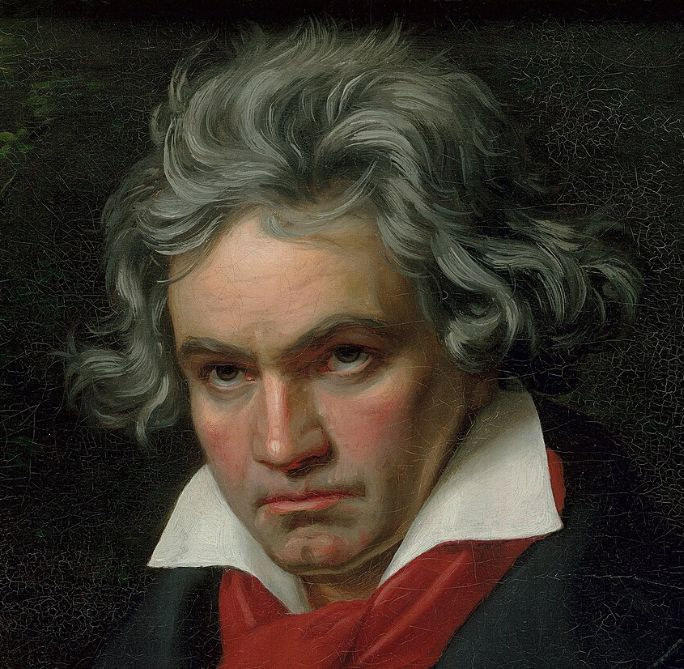
Ludwig van Beethoven was early recognized as a musical genius. He was taught by his father and by several musicians. He found relief from his dysfunctional home life, characterized by his father's increasing alcoholism. From 14 he loved, befriended, and taught piano to Helene von Breuning. At age 21, he moved to Vienna, which became his base and where he studied composition with Joseph Haydn.
Here we present 32 piano sonatas noted down in various sections of his life. The first person to play them all in a single concert cycle was Hans von Bülow, a well-known conductor, pianist, and composer of the time. Hans von Bülow called these sonatas "The New Testament" of piano literature, with Johann Sebastian Bach's The Well-Tempered Clavier being "The Old Testament".
Beethoven was a master of the language of music. These creations emerged from about his deepest love and understanding of music. Beethoven has summed up his life in two quotations: "Music can change the world" and "To play without passion is inexcusable!" We also remember this: "I have never thought of writing for reputation and honour. What I have in my heart must come out; that is the reason why I compose."
Sonata No. 1 in F minor
Sonata No. 2 in A major
Sonata No. 3 in C major
Sonata No. 4 in E-flat major
Sonata No. 5 in C minor
Sonata No. 6 in F major
Sonata No. 7 in D major
Sonata No. 8 in C minor "Pathétique"
Sonata No. 9 in E major
Sonata No. 10 in G major
Sonata No. 11 in B-flat major
Sonata No. 12 in A-flat major
Sonata No. 13 in E-flat major
Sonata No. 14 in C-sharp minor ("quasi una fantaisia"/"Moonlight Sonata")
Sonata No. 15 in D major "Pastoral"
Sonata No. 16 in G major
Sonata No. 17 in D minor "Tempest"
Sonata No. 18 in E-flat major "The Hunt"
Sonata No. 19 in G minor
Sonata No. 20 in G major
Sonata No. 21 in C major "Waldstein"
Sonata No. 22 in F major
Sonata No. 23 in F minor "Appassionata"
Sonata No. 24 in F-sharp major
Sonata No. 25 in G major
Sonata No. 26 in E-flat major "Les Adieux"
Sonata No. 27 in E minor
Sonata No. 28 in A major
Sonata No. 29 in B-flat major "Hammerklavier"
Sonata No. 30 in E major
Sonata No. 31 in A-flat major
Sonata No. 32 in C minor
All were produced with virtual instruments for MP3.
Public Domain
- Details
- Hits: 100
Nikolai Rimsky-Korsakov (1844-1908)
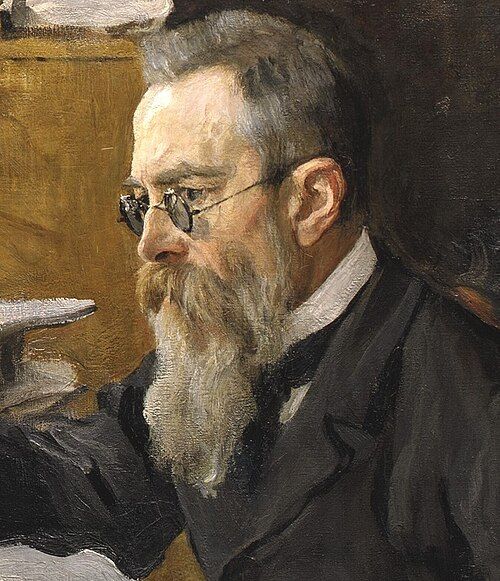
Nikolai Andreyevich Rimsky-Korsakov was a Russian composer. His best-known orchestral compositions - Capriccio Espagnol, the Russian Easter Festival Overture, and the symphonic suite Scheherezade - are staples of the classical music repertoire.
Rimsky-Korsakov employed Western musical techniques when he became a professor of musical composition at the Saint Petersburg Conservatory in 1871. He undertook a rigorous three-year program of self-education and became a master of Western methods.
For much of his life, Rimsky-Korsakov combined his work with a career in the Russian armed forces - first as an officer in the Imperial Russian Navy, then as the civilian Inspector of Naval Bands. He developed a passion for the ocean in childhood from reading books and hearing of his older brother's exploits in the navy. This love of the sea may have influenced him to write two of his best-known orchestral works, the Song of India and Scheherezade. As Inspector of Naval Bands, Rimsky-Korsakov expanded his knowledge of woodwind and brass playing, which enhanced his abilities in orchestration.
Rimsky-Korsakov left a considerable body of original Russian compositions. He is considered "the main architect" of what is considered the "Russian style". His influence on younger composers was especially important as a professional composer who became the norm in Russia by the closing years of the 19th century.
Bumblebee, from “The Tale of Tsar Saltan”, 1899–1900
Capricio Espagnol, Op.34, Mvts. Alborada, Variazioni, Alborada, Scena e canto gitano, Fandango asturiano, 1887
Russian Easter Festival Overture, Op.36, 1888
Scheherazade, Op.35, Mvts. The Sea and Sinbad's Ship, The Legend of the Kalendar Prince, The Young Prince and Princess, Festival at Baghdad. The Sea. Ship Breaks upon a Cliff Surmounted by a Bronze Horseman, 1888
Song-of-India (excerpt), 1898
Trombone-Concerto, Mvts. Allegro vivace, Andante cantabile, Allegro, 1877
The Snow Maiden, Song and Dance of the Birds, 1880-81
All were produced with virtual instruments for MP3.
Public Domain
- Details
- Hits: 331
Johannes Brahms (1833-1897)
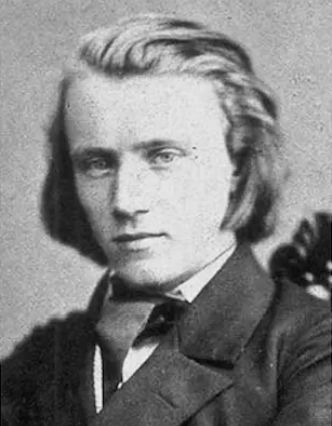
Johannes Brahms was a highly talented, complex and emotional person. He came from a lower middle class Hamburg family and became, against his father's wishes, a musician in the Philharmonisches Staatsorchester playing double bass, horn, and flute. His father had given Johannes his first musical training. From 1840 he studied piano with Otto Cossel who complained about the nine-year old Johannes that he "could be such a good player, but he will not stop his never-ending composing."
At 17 Brahms met the Hungarian violinist Ede Reményi and accompanied him in a number of recitals over the next few years. This was his introduction to "gypsy-style" music such as the Czárdás, traditional Hungarian folk dances. This ultimally led to two famous sets of Hungarian Dances, dated 1869 and 1880.
In 1853 Brahms continued working with Ede Reményi and eventually gained support and guidance from Robert and Clara Schumann. He ended up living with Clara in Düsseldorf, becoming devoted to her, all amid Robert's degressive mental disorders. After Robert's death, they remained close friends. Brahms never married, and focused most on his work on his composing.
In mid-life he became appreciated as an eminent composer, virtuoso pianist, and conductor of the mid-Romantic period. His music featured expressive counterpoint, freer dissonance, rhythmic vitality, and at the same time adherence to traditional forms. His works include four symphonies, four concertos, a requiem, much chamber music, and hundreds of folk-song arrangements and Lieder (German art songs).
Though innovative, he was considered conservative in the "War of the Romantics", that involved counterarguments from the entourage of Franz Liszt. But his works succeeded well in the long term, gaining him a circle of supporters, friends, and musicians. He considered retiring from composition late in life, but kept writing chamber music for prized musicians.
Hungarian Dances_1-10
Hungarian Dances_11-21
Piano Sonata No. 1
Symphony No. 3
Lullaby
All were produced with virtual instruments for MP3.
Public Domain
- Details
- Hits: 379
Antonín Dvořák (1841-1904)
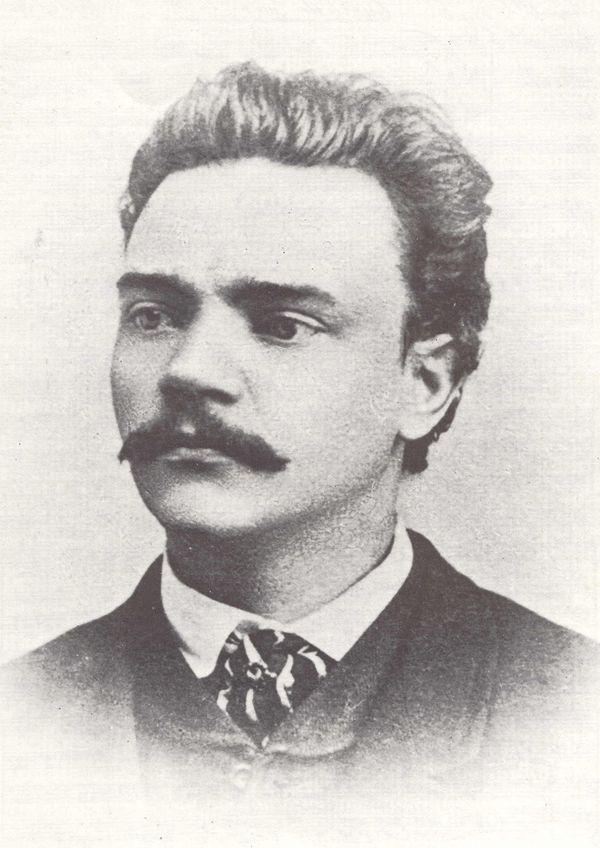
Antonín Dvořák was a musical inventor. He used a great variety of instruments and he combined them well in rhythms of folk music of Moravia and Bohemia. He followed the examples of his predecessor Bedřich Smetana t ultimately led to his notable success.
Dvořák displayed his musical gifts at an early age as a talented violin student. The first public performances of his works were in Prague in 1872 and 1873, when he was 31 years old. In 1882 Dvořák submitted scores of his works to competitions in Germany. In 1877, after his third win, Johannes Brahms recommended Dvořák to his publisher, Simrock, who commissioned what became the Slavonic Dances. The sheet music's high sales and critical reception led to his international success.
In March 1890 a London performance led to many other performances in the United Kingdom, the United States, and eventually Russia. In the United States, Dvorak wrote his two most successful orchestral works: the Symphony From the New World, which spread his reputation worldwide, and his Cello Concerto that was highly regarded. On a summer holiday in Spillville, Iowa, in 1893, Dvořák wrote a famous piece of chamber music, his String Quartet in F major, Op. 96, the American. While he remained at the American Conservatory for a few more years, pay cuts and an onset of homesickness led him to return to Bohemia in 1895.
Four Slavonic Dances, Op.46 (1878)
Symphony No. 9, Op.95 "From the New World" (1893)
Cello Concerto in B minor, Op.104 (1894-95)
String Quartet No. 12 in F major, Op. 96 "American“ (1893)
Serenade for Strings in E major, Op.22 (1875)
Romantic Pieces, Op.75 (1887)
All were produced with virtual instruments for MP3.
Public Domain
- Details
- Hits: 547
Isaac Albéniz (1860-1909)
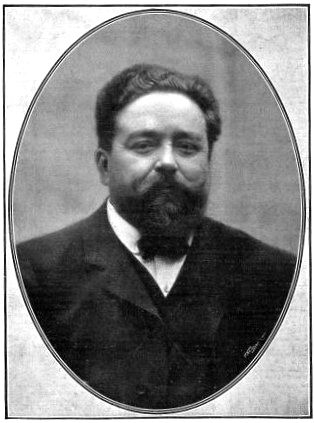
The music by Albéniz as conductor, performer and composer significantly raised the profile of Spanish music and encouraged his music in his own country. Albéniz's works were originally composed for the piano, but they have been transcribed to the classical guitar which we use here in Songs of Spain, published in 1892 and 1898.
Contains: Asturias, Sevilla, Cadiz, Granada, Rumores, Torre-Bermeja
Francisco Tarrega (1852-1909)
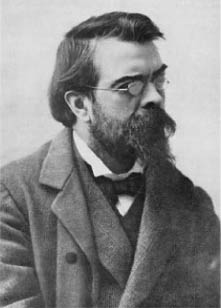
Tárrega preferred small intimate performances over the concert stage. He is considered to have laid the foundations for the 20th-century classical guitar and for increasing interest in the guitar as a recital instrument. The city of Granada inspired him to write “Recuerdos de la Alhambra”, which he first dedicated to his wife Concepción in 1899.
Contains: Recuerdos de la Alhambra, Study-in-e-minor, Lagrima, Gran-jota-de-concierto, Estudio-de-velocitá
Moreno Torroba (1891-1982)
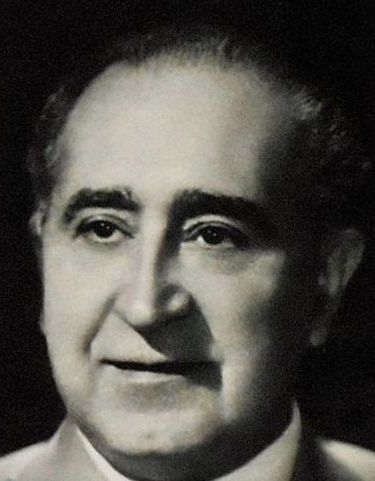
Torroba was not only a prolific guitar composer, but one of the leading advocates of the zarzuela, the light Spanish opera form characterized by a blend of sung and spoken dialect. As conductor and impresario, he travelled widely, visiting the United States and Latin America. Moreno Torroba’s musical vocabulary avoided twentieth century lines. He preferred melodic music with tonal harmony.
Contains: Mazurca-de-las-sombrillas, Romance-de-los-pinos, Romancillo, Torija elegía
All were produced with virtual instruments for MP3.
Public Domain