



Antonín Dvořák (1841-1904)
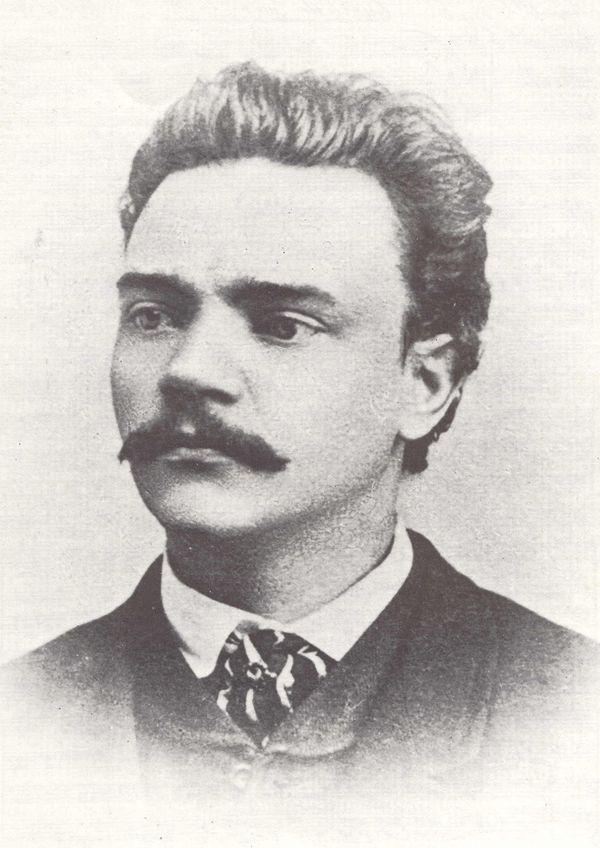
Antonín Dvořák was a musical inventor. He used a great variety of instruments and he combined them well in rhythms of folk music of Moravia and Bohemia. He followed the examples of his predecessor Bedřich Smetana t ultimately led to his notable success.
Dvořák displayed his musical gifts at an early age as a talented violin student. The first public performances of his works were in Prague in 1872 and 1873, when he was 31 years old. In 1882 Dvořák submitted scores of his works to competitions in Germany. In 1877, after his third win, Johannes Brahms recommended Dvořák to his publisher, Simrock, who commissioned what became the Slavonic Dances. The sheet music's high sales and critical reception led to his international success.
In March 1890 a London performance led to many other performances in the United Kingdom, the United States, and eventually Russia. In the United States, Dvorak wrote his two most successful orchestral works: the Symphony From the New World, which spread his reputation worldwide, and his Cello Concerto that was highly regarded. On a summer holiday in Spillville, Iowa, in 1893, Dvořák wrote a famous piece of chamber music, his String Quartet in F major, Op. 96, the American. While he remained at the American Conservatory for a few more years, pay cuts and an onset of homesickness led him to return to Bohemia in 1895.
Four Slavonic Dances, Op.46 (1878)
Symphony No. 9, Op.95 "From the New World" (1893)
Cello Concerto in B minor, Op.104 (1894-95)
String Quartet No. 12 in F major, Op. 96 "American“ (1893)
Serenade for Strings in E major, Op.22 (1875)
Romantic Pieces, Op.75 (1887)
All were produced with virtual instruments for MP3.
Public Domain